
GICT knowledge base
What is a Guest Post & Why You Should Start Guest Blogging
Published
A guest post is when a blogger writes an article for someone else’s blog. People usually do this as a way to:
- Build their reputation in their area of interest.
- Reach more people and grow their network.
- Increase website traffic.
Though guest posting is a popular strategy, it can be tough if you don’t have much experience or many connections. That’s why we’ve put together this easy guide on guest blogging. We’ll show how new bloggers can find guest posting opportunities, write great posts, and ensure the content works well.
Reasons to Start Guest Blogging
Let’s start by talking about how guest blogging can help new bloggers.
Boost Website SEO and Authority
Guest posting can improve SEO in two key ways – let’s begin with building backlinks.
When you write a guest post, you’re often allowed to add one or two links back to your own blog, either in the content or in your author bio. Search engines view these links as a sign that one website is recommending another, which can make the linked site appear more trustworthy. This can help the blog get ranked higher on Google, leading to more organic traffic. Research from Ahrefs shows that websites with more backlinks tend to attract more organic traffic.

Another way guest posting helps SEO is by getting your brand mentioned online.
For example, if you run a business blog and write for well-known sites like Forbes and Entrepreneur, the more your name shows up on popular websites in your field, the more likely search engines will view you as an expert in your industry.
However, bloggers should be careful with guest posting. Google can see too many guest posts as a trick to manipulate rankings, so it’s important not to go overboard.
Expand Your Blog Audience
Guest posting lets you reach the audience of other blogs, which can bring more visitors to your site and even lead to conversions.
Many companies have done well with this. For example, the SaaS company Groove says they reached over 1 million readers through guest blogging. Similarly, Help Scout gained over 36,000 new email subscribers using this approach.
The key to getting great results is to focus on blogs whose readers match your own audience, whether by interest, behavior, or demographics. These readers are more likely to check out your website after reading your guest post.
Widen Your Network
Guest posting also gives you a chance to connect with other bloggers and businesses.
The more you share your content ideas and publish posts on related blogs, the more people will recognize your name in the industry. This can lead to more opportunities for partnerships down the road.
That said, it’s important to choose the right blogs to work with. You don’t need to focus only on blogs with huge traffic, but the sites you write for should have valuable content and an active audience. Avoid low-quality, spammy blogs, as they can harm your reputation.
Market Your Products or Services
If you have a business, guest posting can be a good way to promote your products or services.
Many blogs let you add this information in your author bio, like in this guest post by Elna Cain on Blogging Wizard.
In some cases, you might even mention your product or service if it fits well with the topic of the post. For example, in an Ahrefs guest post about increasing blog traffic, the writer talks about his agency, Growth Machine, to show how successful the strategy has been.

While the post doesn’t directly promote the business, it gives potential clients an idea of what his agency can do.
Just remember, most blogs don’t like direct self-promotion in guest posts. Be careful not to sound too salesy, and always check the guidelines to see what’s allowed in the content.
Monetize Your Content
For freelance writers and bloggers, guest posting can be a way to earn money. Some blog owners pay writers a commission for each post they publish. However, these jobs often come with more specific guidelines.
The pay can vary a lot, but most reliable blogs offer around $75 or more, depending on the length and topic of the post.
How to Write a Guest Post
Guest posting usually begins by finding blogs to write for, sharing your ideas with the blog owner, submitting your content, and then promoting it to reach more people. In this section, we’ll go through each step and share some top tips for successful guest posting.
Find Guest Posting Opportunities
The first step is to find blogs in your niche that accept guest posts. If you already have a few blogs in mind, add them to your list. Then, check their website to see if they accept guest posts. This info is usually found on the About, Contact, or FAQ pages. Alternatively, you can use Google to search for guest post opportunities by typing in:
- site:websitename.com guest post
- site:websitename.com write for us
These search terms will help you find any page on the website that mentions guest posting.

To find more guest posting chances on other websites, use these search phrases, replacing “keyword” with a word or phrase related to your field:
- “keyword” + “guest post”
- “keyword” + “write for us”
- “keyword” + “guest post guidelines”
- “keyword” + “guest blogging guidelines”
- “keyword” + “contributor guidelines”
- “keyword” + “guest post submissions”
- “keyword” + “accepting guest posts”
- “keyword” + “submit guest post”
For example, if you search for “tech” + “write for us,” you will see results related to guest posting opportunities in the tech field.

Twitter is a great platform for finding guest post opportunities. Simply search for a keyword related to your niche along with terms like “guest blog” or “guest post.” Then, browse the results to find potential sites to target.

Another method is to look at your competitor’s backlink profile to see where they’ve guest posted. You can use tools like Ahrefs’ backlink checker for this.
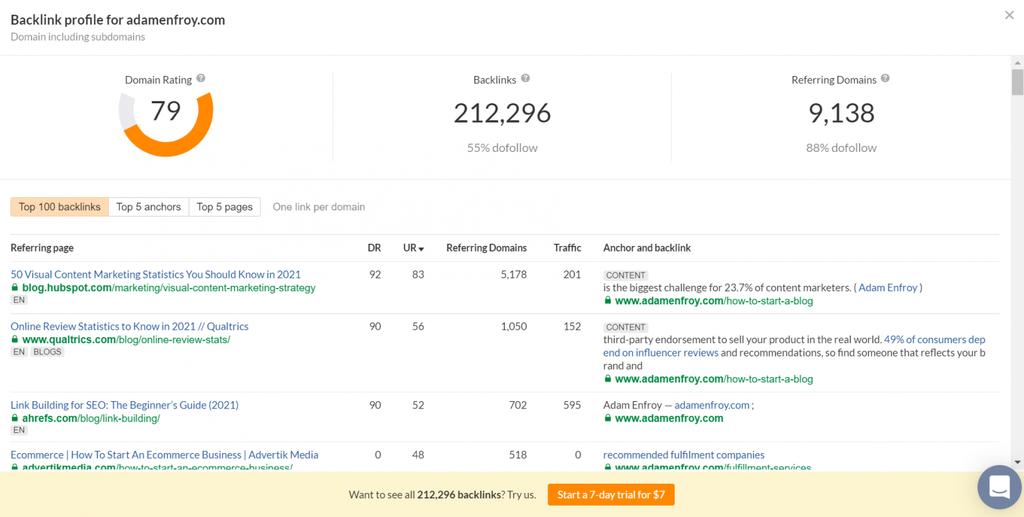
Keep in mind that not all sites will directly mention guest posts. However, that doesn’t mean they don’t accept content from others. If that’s the case, note down the blog owner or editor’s email, so you can reach out later.
As mentioned earlier, it’s important to check each blog to make sure it’s a good fit. Once you’ve found some potential sites, evaluate the following factors to narrow down your list:
- Target audience: Are their readers the kind of audience you want to reach? Do they have similar interests to your readers? Will they be likely to visit your website after reading your guest post?
- Engagement: Check how much interaction the guest posts get in terms of comments and shares. Also, see if the blog owner shares content on social media to promote guest posts.
- Credibility: How well-known and trusted is the blog? You can use the Domain Rating (DR) metric in Ahrefs to measure this. Start with blogs that have a DR between 20 and 50. These may not be huge authority sites, but they’re more likely to work with new bloggers.
Once you’ve created a strong list, choose one site to focus on and move on to the next step.
Brainstorm Ideas for the Guest Post
The second step is to come up with content ideas for the blog you want to write for. The post should meet the site owner’s needs, address the audience’s problems, and cover a topic that hasn’t been written about much in other guest posts. Many sites have a guest posting guidelines page where they list the types of topics they’re looking for and how they want the content to be structured. These guidelines are a great place to start when brainstorming ideas.
It’s also helpful to check out their most popular posts to see what their audience enjoys. Tools like Ubersuggest can show you the most visited pages on any site.
In addition to that, check out their most recent blog posts to get an idea of the site owner’s current content focus. They’re more likely to accept your proposed headline if it fits with their ongoing goals.
Here are some other tips for finding the right guest post idea:
- Choose an idea that shows off your expertise. Sharing personal experiences, successes, and mistakes can make your article more authentic and trustworthy.
- Look for trending topics in your niche. Tools like Google Trends and BuzzSumo can help you see what’s popular right now.
- Offer to rewrite an underperforming guest post. Use an SEO tool to find posts that haven’t gotten much traffic or engagement, then suggest ways to improve them, such as updating the content, adding more detail, or reorganizing it.
Once you’ve come up with two or three strong topics, choose the best ones with the highest chance of getting accepted and move on to the next step.
Pitch Your Guest Post’s Content
Let’s create a cold email to help you land your first guest post opportunity. Depending on the blog, some may want you to send the full article right away, rather than pitching ideas. Be sure to check their guest post guidelines before you proceed.
Make sure you have the right contact information. Send your pitch to the person in charge of editorial content, not customer service or advertising. It’s also a good idea to connect with the blog owner or editor before you send the pitch. This helps them recognize your name and makes it more likely they’ll open and read your email.
Begin by leaving comments on their latest posts, sharing their articles on your social media, or interacting with them on social networks. Spend a couple of weeks doing this before you send your pitch.
Once that’s done, it’s time to write your email. Here are some tips for crafting your guest post pitch:
- Make it personal. Don’t send the same message to everyone. Address the person by name and mention a blog post of theirs you like to show you’ve done your homework.
- Create an appealing subject line. Simply writing “guest post pitch” isn’t enough to grab attention. Try referencing one of your content ideas to give them a reason to open it.
- Keep it short and clear. Introduce yourself, explain why you’re reaching out, and mention your content ideas. Aim for around 50 to 125 words.
- Include writing samples. Share links to any writing you’ve done to show your skills and set expectations. If you have guest posts on other blogs, include those links in the email.
- Proofread. Check for any spelling or grammar errors to show you’re professional.
- Use an email signature. Add your name, website, and social media handles so they can easily find out more about you.
- Ask for an introduction. If you know someone who has guest posted on the site, ask them to vouch for you. The blog owner will likely trust you more if they’re introduced by someone they’ve worked with.
- Use a professional email address. Having a custom email address makes your pitch look more credible. You’ll need an email hosting service for this.
If you’re looking for inspiration for your email, here’s an example you can refer to:
Subject line: Guest post idea for Healthy Fast Food: How to make oil-free french fries
Hi Jamie,
I’m Alex, a blogger over at Easy Home Cooking.
I’ve been trying out some of your recipes – the low-calorie chicken nuggets were a huge hit! I’d love to share a few guest post ideas that fit well with that theme:
- How to make oil-free french fries
- Top 10 vegan meat recipes for burgers
- How to make sugar-free soft-serve ice cream
For reference, here’s an article I wrote about the best non-dairy milk for Health Nut blog. It’s gotten 5k monthly visits and over 250 shares on Facebook.
Looking forward to your thoughts!
Thanks,
Alex Linden
Blogger and recipe developer at Easy Home Cooking
Write High-Quality Content
Once your idea is accepted, it’s time to write the content. While every blog has its own rules, here are some general tips to help you write a great guest post:
- Understand the search intent. Think about what readers want to achieve by reading your post. Make sure to answer their most important questions about the topic.
- Make it stand out. Try to offer something new, whether it’s fresh information, a unique perspective, or practical tips that others haven’t covered.
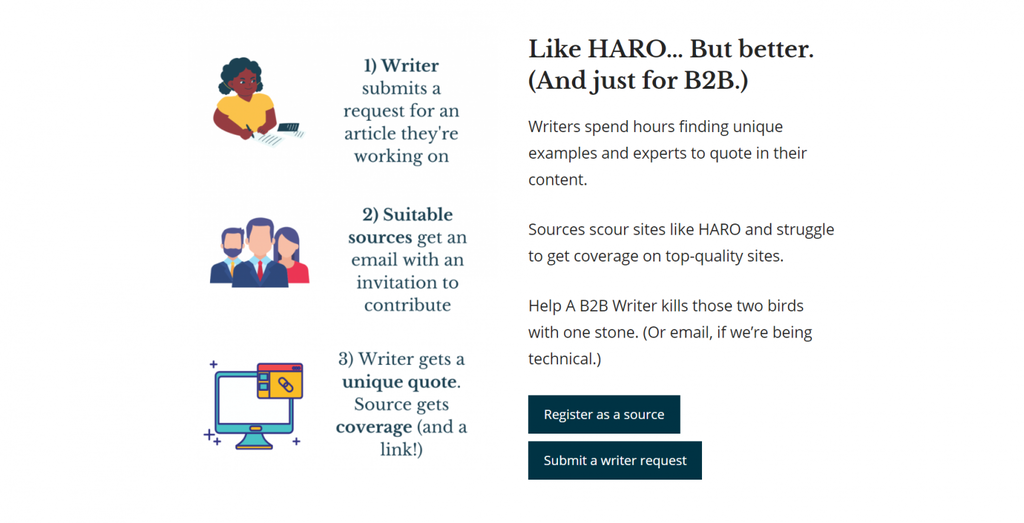
- Use expert quotes. Adding expert opinions can make your post feel more trustworthy and valuable. You can find these using HARO or Help a B2B Writer, especially for business-related topics.
- Avoid self-promotion. Most blogs don’t like it when guest authors promote their own products or services. You can mention them, but only if it fits naturally with the topic.
- Incorporate keywords for SEO. Include keywords, but make sure they fit naturally within the text.
- Match the blog’s style and format. Your post should align with the blog’s usual tone, structure, and depth of information.
- Focus on readability. Write in a way that’s easy to follow. Use simple words, active voice, short paragraphs, and lists to break up the text.
Craft a Compelling Headline
Once you’ve written a great post, the next step is to create an attention-grabbing headline. It should make people want to click on your article when they see it on the blog’s homepage or in search results.
Here are a few tips for coming up with headline ideas:
- Highlight how the article helps the reader. People are more likely to click on a title that addresses their needs.
- Use numbers when it makes sense. Studies show that headlines with numbers tend to get more clicks. This is especially effective for list articles or how-to guides.
- Ask a question. Since questions make up 8% of Google searches, framing your headline as a question can catch the reader’s attention.
- Optimize for search engines. Keep your title around 70 characters, as this is the length Google will show in search results. Be sure to include your target keyword.
- Avoid clickbait. Don’t exaggerate what the article is about or promise something that the content doesn’t deliver.
Use Internal and External Links
Internal linking isn’t just great for SEO; it also shows the editor that you’re familiar with their content, which can increase your chances of getting the guest post published. When adding internal links, only refer to other blog posts that are relevant and support your article. To find these posts, you can search for “site:websitename.com [keyword]” on Google. This will show you all the pages on the site that include that term.
For example, searching “site:hostinger.com/tutorials web hosting” will display relevant pages. Also, make sure to use descriptive anchor texts so both search engines and readers can understand what the linked page is about. It’s also a good idea to include external links that could drive traffic to your blog. But only add them if they fit naturally within the content. Check the guest posting guidelines or ask the blog editor how many links are allowed. It’s better to link to a specific article instead of a homepage or sales page to avoid being too promotional.
Submit the Guest Post
The last step is to submit your guest post to the target site. Before you send the final version, make sure to edit and proofread it carefully. Look for any grammar mistakes, typos, broken links, or unclear images. You’ll also need to write a short author bio. This is your chance to introduce yourself and usually includes a link to your website’s landing page.
For example, Ryan Robinson, a former contributor to Forbes, has a great bio. He talks about what he does without being too promotional and adds his website link naturally. He also mentions the number of readers on his blog to add credibility.
Once you’ve sent the email, wait a few days for a reply. If you don’t hear back, you may need to follow up, especially if the site receives a lot of submissions. After your post is published, keep a positive relationship with the blog owner or editor. This can help you secure more guest posting opportunities in the future. Be sure to send a thank-you email, share the article on social media, and respond to any comments on the post. Engaging with the audience this way is a great way to build connections and show your expertise.
Conclusion
In conclusion, a guest post is an article you write for someone else’s blog. Bloggers often do this to gain authority, expand their network, and reach more people. This guide has broken down guest posting into seven easy steps:
- Find guest post opportunities – Look for well-known, active sites that welcome guest posts and align with your blog’s audience.
- Come up with fresh ideas – Your post should meet the site’s guidelines, help the blog owner’s goals, solve the audience’s problems, and show off your expertise.
- Pitch your ideas – Before you pitch, try to get familiar with the blog owner. Then, send a personal email with your ideas.
- Write quality content – The content should meet the readers’ needs, match the blog’s style, and be unique, easy to read, and optimized for search engines.
- Create a catchy title – The title should grab attention and make readers want to click on your article.
- Add links – Include internal links to other relevant posts on the blog, and link to your own content when it fits naturally.
- Submit your post – Proofread the article, write your bio, and send it to the blog owner. Once published, share it on social media and respond to comments.
Now that you know how to guest blog, all that’s left is to take the first step. Check out blogs that accept guest posts or do some quick searches to find the right site. If you have any questions or comments, feel free to leave them below.
Related guides
7 Common Hosting Mistakes Beginners Make (And How to Avoid Them)
7 common hosting mistakes beginners make in 2026: no backups, ignored updates, bad host choice, weak passwords, single point of failure, no staging. With fixes for each.
WordPressWebsite Migration Backup Checklist: What to Save and How to Test
Prepare a website migration backup: inventory files, databases, email and DNS, check archive integrity, test recovery and plan a safe final synchronization.
WordPressCore Web Vitals in 2026: A Practical Fix Guide for Site Owners
Core Web Vitals 2026: practical fixes for LCP, INP, and CLS. Real root causes, what to measure, common misconceptions, and a priority order of fixes for site owners.
WordPressFixing the WordPress “Death Loop”: When Missing Files slow down your site
You’ve just launched your new WordPress site or pushed a big update. In your staging environment, everything ran perfectly.