
GICT knowledge base
Enable WordPress Manager in cPanel
Published
WordPress is a free and open-source content management system which is commonly used to build websites on the internet. cPanel&WHM has provided a feature called WordPress Manager which allows you to manage new or existing WordPress sites on your cPanel account. This WordPress Manager interface will allow you to view your WordPress database name and user etc. It is also helpful to manage each site’s automatic updates configuration. In addition to that, you can also change the WordPress administrator users’ passwords and can view each site’s basic WordPress configuration etc. The cPanel WordPress Manager is a free add-on that can be used by your cPanel users. In this documentation, we are going to discuss about how to enable WordPress Manager feature from WHM.
1) Log in to WHM panel using the username and password.
2) Navigate to “cPanel” section.
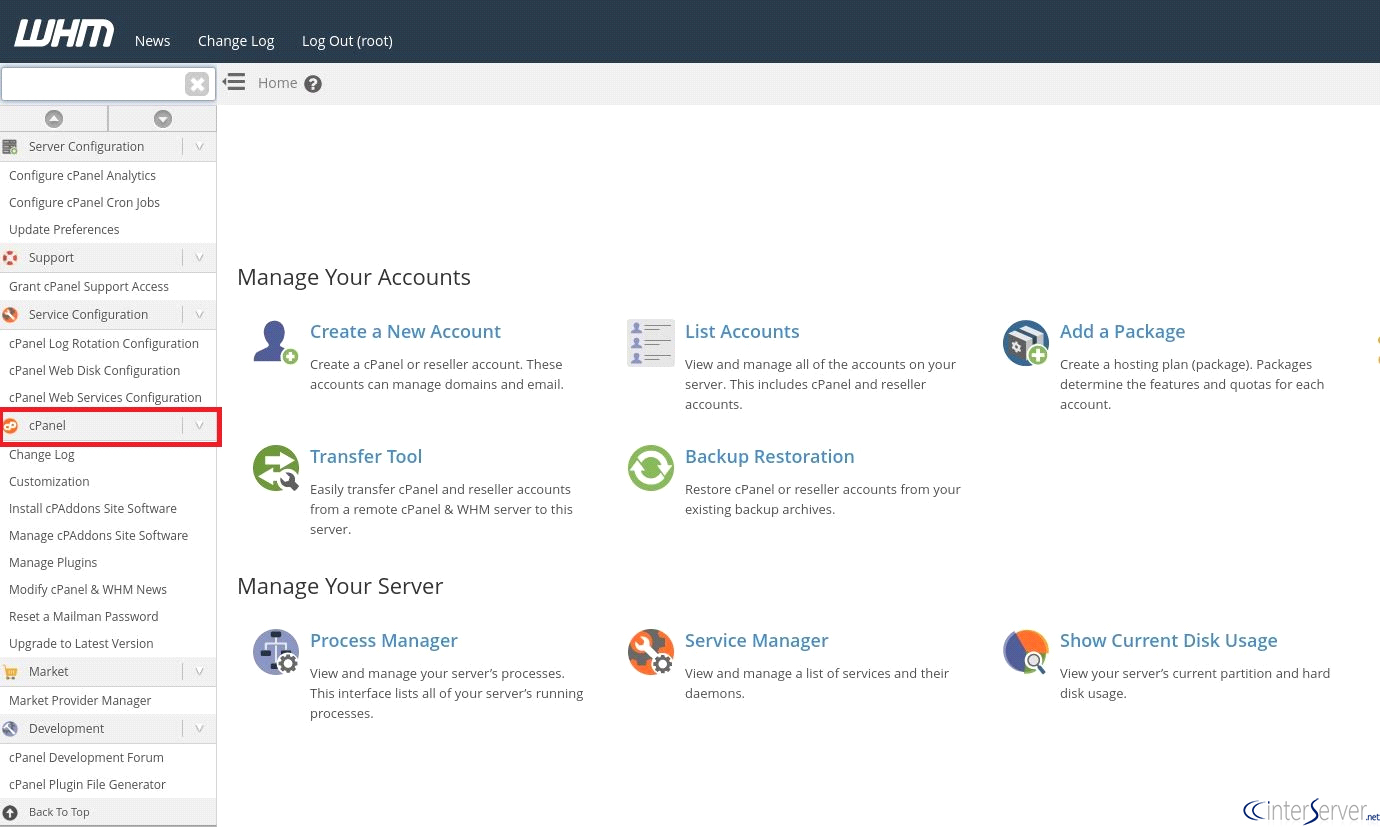
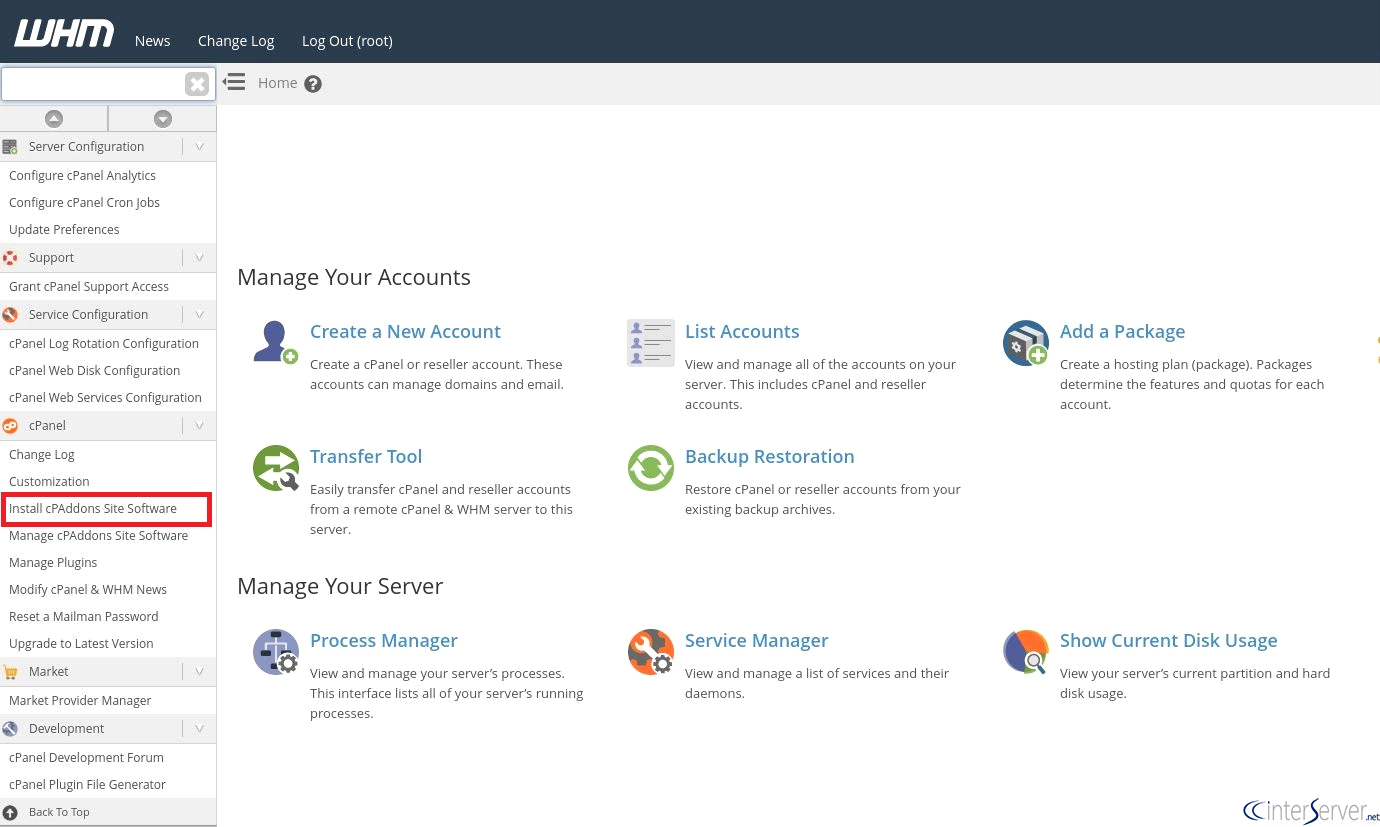
3) Select the option “Install cPAddons Site Software” from the page.
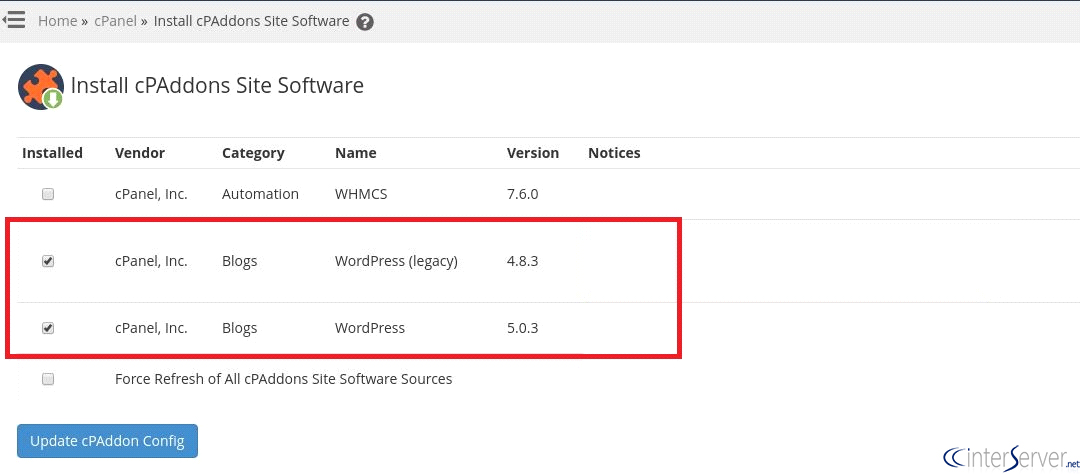
4) Here, you can see the cPAddons Site Software interface. Now you should ensure that all the latest WordPress versions are checked.
5) Click on “Update cPAddon Config” button to update the changes.
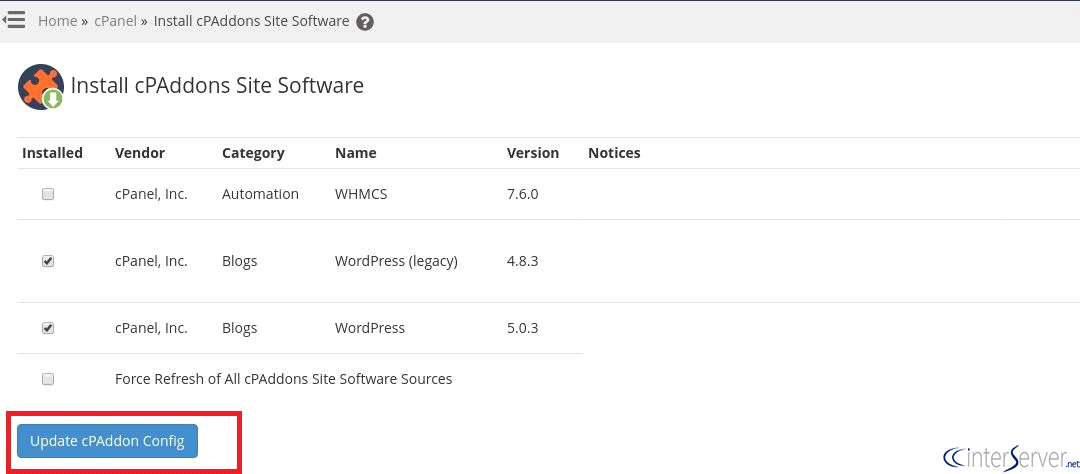
Here, the installation of the cPanel WordPress Manager is complete. You can access the WordPress Manager from your cPanel.
If you need any further help, please do reach our support department.
Related guides
How to Install and Uninstall JetBackup for cPanel
How to Install JetBackup for cPanel. JetBackup is one of the leading backup solutions for cPanel & WHM that offers a user-friendly GUI. It provides
WHMSetup SendGrid on your cPanel VPS/Server
Setup SendGrid on your cPanel VPS/Server. SendGrid provides a cloud-based service for reliable transactional and marketing email.
WHMChange cPanel Nameserver Software to PowerDNS Carefully
Review WHM nameserver selection, resolver dependencies, cluster compatibility and DNSSEC requirements before a planned PowerDNS service change.
WHMTroubleshooting Jailed Shell on OpenVZ
cPanel/WHM providing Jailed shell environment for users, this feature giving high-level security for users when doing ssh access to their server.