
GICT knowledge base
The Complete Guide to Marketing Your Digital Products Effectively
Published
Digital products are items that you sell and deliver online without any physical version. Examples include PDFs, ebooks, music, videos, software, templates, online courses, and other digital content.
To market digital products successfully, you need to build trust with customers, pick the right marketing platforms, and come up with smart strategies to grow. But how do you do that?
In this article, we’ll walk you through ten strategies to promote your digital products, with helpful tips and tools to boost sales and grow your business.
Understand Your Target Audience
To market digital products successfully, it’s important to know your audience. Understanding who they are helps you pick the best platforms, craft the right messages, and improve your sales approach.
Start by Gathering Audience Insights
To understand your audience, start by looking at some key details:
- Demographics: This includes things like age, location, job, income, and education.
- Interests and habits: Think about their hobbies, how they spend money, which platforms they use, and what kind of content they like.
- Problems they face: What challenges do they need help with?
For example, if you’re selling budgeting templates, your audience could be young professionals who need help managing their money. If you’re offering graphic design courses, your buyers might be people who want to learn design skills.
Segment Your Audience for Better Targeting
Not all customers are alike. Dividing them into smaller groups allows you to create more tailored and effective marketing. Here’s a simple example of how you can do this:
Optimize Your Digital Product Website
Having your own website gives you more control over your brand and how customers experience your business. It’s also the main place where you can drive traffic and turn visitors into buyers.
Key Areas to Improve Your Website:
- Keep your branding consistent: Use the same fonts, colors, and logo throughout your site. This helps create a strong, professional brand that is easy to recognize.
- Make navigation simple: Organize your categories, use clear menus, and remove extra steps to make it easier for users to find what they need. A simple, clean design helps visitors find and buy your products faster.
- Use clear call-to-action buttons: Add action-focused text like “Buy Now” or “Get Started” to guide visitors toward making a purchase or signing up.
- Optimize product pages: Write clear and convincing descriptions, use high-quality images, and highlight the main benefits of your products. Make sure your titles and descriptions are SEO-friendly to help you rank higher on search engines and attract more visitors.
- Simplify the checkout process: Cut down on steps, offer different payment options, and use auto-fill for forms to make it easier for customers to complete their purchase.
A great example of this is Heather Farris’ website. It has clear CTAs, well-organized product pages, and consistent branding – all of which help turn visitors into buyers.

Use Social Media to Promote Digital Products
Once your website is optimized to turn visitors into customers, the next step is to drive traffic from social media. 82% of shoppers use social media to research products, making it a great way to reach your target audience and showcase your digital products.
- Facebook: Great for connecting with groups and growing your network. It helps you build brand awareness and attract new customers. Facebook Ads can be especially useful for launching new digital products, which we’ll dive into in Step 7.
- Instagram: Perfect for sharing visual products like social media templates. Many Instagram creators link to their online shops in their bios. For example, @tinaghazidigital teaches people how to make money selling digital products.
- TikTok: Popular with younger users who enjoy more relaxed, personal content, like “day-in-my-life” videos. Many creators, such as @moneywithmak, organize their videos into playlists, helping followers easily find the latest or most popular content.
- LinkedIn: Commonly used for selling professional tools or B2B products. You can check out a guide on LinkedIn selling to learn more.
- Pinterest: Works well for linking pins to blog posts, product pages, or landing pages. It’s perfect for evergreen content that brings in traffic over time.
- X (formerly Twitter): Useful for building a personal brand, connecting with potential buyers, and sharing helpful information about your digital products.
- Discord: Great for creating a community around your product. It’s especially good for online courses, gaming products, and exclusive memberships.
No matter which platforms you use, the main point is that your audience wants value—they want to learn, engage, and get something out of it. That’s why many creators combine tutorials, how-to content, and product promotion to build trust and form stronger connections with their followers.
Tap into Content Marketing to Drive Sales
Content marketing works best when it offers real value to your audience. By creating helpful and informative content, you can position yourself as an expert in your field and build trust with potential customers.
Types of Content That Can Help Drive Sales:
- Blog posts: Create detailed guides, lists, and case studies that highlight your expertise.
- Tutorials: Show readers how to use your digital product to solve a problem.
- Long-form content: Publish ebooks, whitepapers, or industry reports to attract more serious buyers.
- Webinars: Host live or recorded sessions to connect directly with your audience.
While providing valuable content is key, it’s also important to make sure people can find it. SEO is crucial for increasing the visibility of your content.
To get more people to see your content, start by targeting long-tail keywords. These keywords have a higher click-through rate (CTR) of 31% and often bring in more qualified traffic, leading to better conversions.
Next, optimize your content by adding internal links to guide visitors through your site, and make sure your titles, descriptions, and tags are all set up to improve your search ranking.
For more tips, check out our guide on writing SEO-friendly content.
Leverage Email Marketing Strategies
Email marketing leads to 174% more conversions than social media, making it a strong tool for focused marketing and increasing sales. However, to get the best results, you need to use the right strategy.
Build and Grow Your Email List
To make your emails more engaging and relevant, start by personalizing them. You can use tools like Google Analytics and segmented email campaigns to help with this.
If you want to learn more about the basics, check out our guide on creating an email newsletter.
To grow your email list, try these lead-generation methods:
- Offer free trials, special discounts, or early access to new products.
- Create lead magnets like ebooks, checklists, or PDF guides related to your products to encourage sign-ups.
- Run a drip campaign. This is a series of emails that helps you stay in touch with your audience, share useful content, and gently nudge them toward taking action.
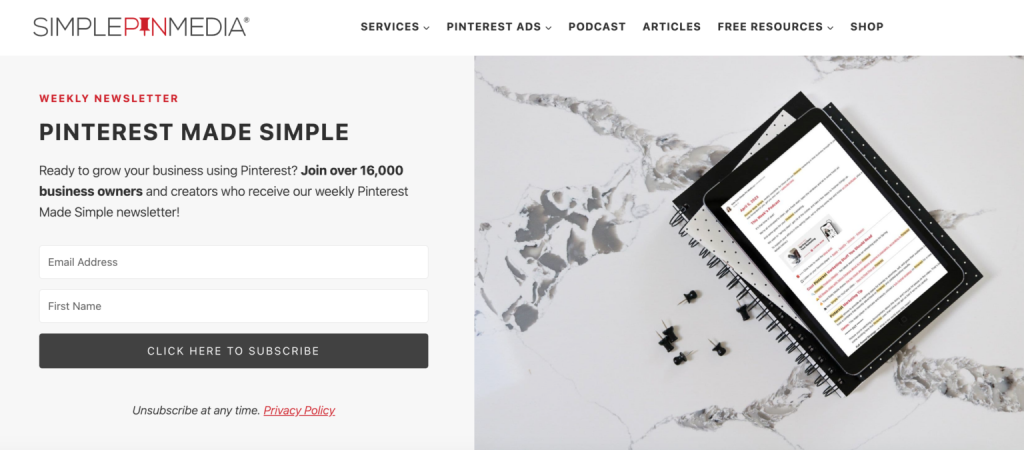
- Set up a page on your website to collect email addresses. For example, Simple Pin Media’s newsletter page offers Pinterest marketing tips, including videos, podcasts, and downloadable resources, giving visitors a great reason to subscribe.
Launch “Pay What You Want” Campaign
Along with your regular pricing, you should try different pricing strategies for your products. One option to consider is the Pay What You Want (PWYW) model.
With PWYW, customers choose how much they want to pay instead of sticking to a fixed price. You can set a minimum price or leave it completely up to them.
After the customer selects a price and completes the purchase, they get the product. This approach helps reduce any hesitation, making it easier for customers to buy, and may even encourage some buyers to pay more to support creators.
Setting Up a PWYW Campaign
- Modify the product: Offer a basic version of your product with PWYW pricing, while keeping the advanced features or premium content at a fixed price. This way, you can encourage upgrades without lowering your product’s value.
- Set a minimum price: Instead of making it entirely free, set a low minimum price that covers your costs while keeping it affordable for most people.
- Use PWYW for lead generation: Ask for customers’ email addresses during the checkout so you can send them exclusive offers and future upsells.
- Create urgency: Run the PWYW campaign for a limited time or offer bonuses to customers who pay above a certain amount. This encourages people to pay more.
- Track and optimize: Keep an eye on how much people are paying, your conversion rates, and feedback from customers to adjust your pricing or product strategy.
Use Paid Advertising to Boost Sales
Paid ads can boost your sales by showing your products to the right people at the right time. Unlike organic marketing, which takes a while to grow, paid ads give you quick visibility and clear results.
Let’s break it down into two types: Google ads and social media ads (like Facebook and Instagram).
Google Ads
Google Ads works on a pay-per-click (PPC) system, meaning you only pay when someone clicks on your ad. This makes it affordable because you can set a daily budget and change it based on how well your ads perform.
Getting Started with Google Ads:
- Set a goal: Decide what you want—more website visitors, leads, or sales. Google Ads lets you pick a campaign goal that fits your needs.
- Choose your keywords: Use Google Keyword Planner to find keywords that have good search volume but aren’t too competitive.
- Set a budget: Start with as little as $5 a day and increase it as you see results.
- Write great ad copy: Make it clear, attractive, and action-focused, like “Get 20% Off – Limited Time Only!”
- Track and adjust: Check your ads regularly to make sure your strategy is working. We’ll cover more on this in Step 10.
Facebook and Instagram Ads
Facebook and Instagram Ads are managed through the Meta Ads Manager, which lets you create campaigns for specific goals like engagement, lead generation, or direct sales.
Create a Successful Ad:
- Use eye-catching visuals: High-quality images or short videos usually perform the best.
- Write a clear call-to-action (CTA): Phrases like “Shop Now,” “Sign Up for Free,” or “Get 50% Off” encourage people to act right away.
- Use retargeting: Show ads to people who have visited your website but haven’t bought anything yet.
- Set a smart budget: Start with $3–$10 a day, try different ad types, and increase the budget for what works best.
Create a Resource Hub or Knowledge Center
Your website can become a helpful resource where customers can find useful information about your niche.
How to Create a Knowledge Hub:
- Create easy-to-follow tutorials: Show potential customers how to use your product with simple, step-by-step guides.
- Share expert advice: Provide useful industry tips and insights to make your brand the go-to source for information.
- Publish case studies: Highlight real-world success stories to build credibility and trust.
- Add an FAQ section: Answer common questions and address any troubleshooting issues to improve the user experience.
Monitor Analytics and Adjust Your Strategy
Tracking how well your digital products are doing helps you figure out what’s working and where you can make improvements.
Key Metrics to Track:
- Sales and conversion rate: Monitor the percentage of visitors who make a purchase.
- Traffic sources: Find out where your visitors are coming from (search engines, social media, ads).
- Customer behavior: Look at how users interact with your product pages (time spent, clicks, exits).
- Repeat customers: Track customer loyalty and how valuable your product is to them.
- Refund rate: A high refund rate could mean your product descriptions aren’t clear or the quality might be an issue.
Google Analytics 4 (GA4) is a great tool to track your website’s performance, user behavior, and sales trends.
If your metrics aren’t where you want them to be, try these strategies:
- Start A/B testing: Test different landing pages, ads, and calls to action (CTAs) to see which ones work best.
- Make adjustments in real time: Use analytics to fine-tune ad targeting, pricing, or content.
- Do an SEO audit: Work on improving your website’s search rankings and visibility.
Use Reviews and Customer Feedback to Strengthen Your Brand
Marketing doesn’t end once a customer buys your product. What they say afterward can influence future sales.
Gathering Customer Reviews:
- Follow up with customers: Send an automated email asking for a review after they make a purchase.
- Make it easy to leave reviews: Let customers post reviews directly on your website or use a platform like Trustpilot.
- Offer an incentive: Give customers a discount on their next purchase in exchange for leaving a review.
Once you’ve got reviews, display them on different platforms to build trust and boost conversions.
Conclusion
Marketing digital products is all about building trust, showing value, and using data to increase sales. Here’s a quick summary of how to create an email newsletter:
- Choose an email newsletter service.
- Design a sign-up form.
- Build your email list.
- Launch your first newsletter campaign.
To help you create newsletters that work, we also shared seven tips to make your email campaigns more effective, like personalizing content and making sure your emails are mobile-friendly.