
GICT knowledge base
Bitbucket vs. GitHub: Choosing the Right Code Repository for Your Projects
Published
Bitbucket and GitHub are both web-based version control repository hosting services.
Bitbucket, launched in 2008, focuses on providing a solution for small teams to host and manage their code repositories, with built-in Jira integration and a focus on private, internal development teams.
GitHub, launched the same year, quickly became the world’s largest host of source code and geared towards open-source development with a large community of developers. It provides various tools for code review, project management, and documentation. Microsoft acquired GitHub in 2018. Both platforms offer code review tools, issue tracking, and project management features, but GitHub has a larger ecosystem of integrations and add-ons.
In this article, we will learn all the important details about these both Code Repositories. Then, we also mentions the key differences based on features. It will help you to choose the best repository as per your need. Here, we explained both code repositories and it’s features.
BitBucket in Brief
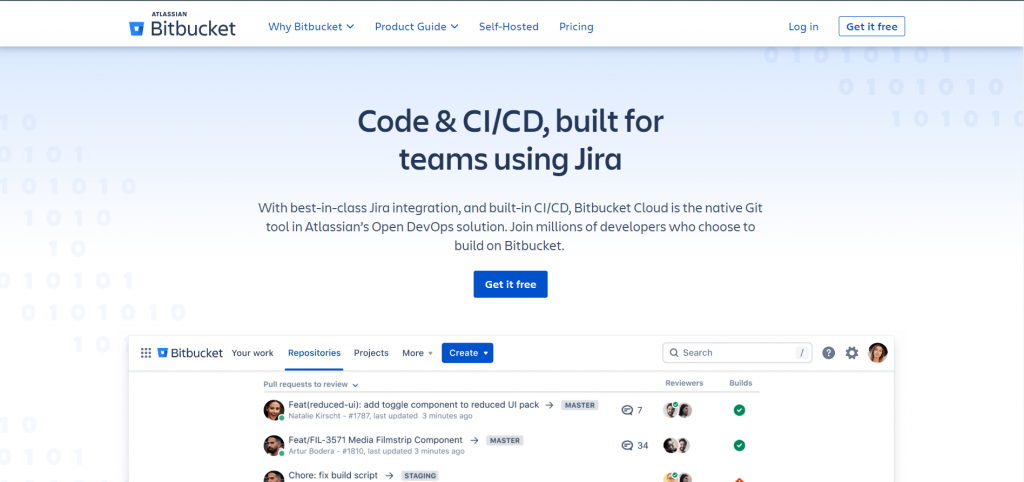
Bitbucket is a web-based version control repository hosting service owned by Atlassian. It allows users to host their Git and Mercurial repositories. Bitbucket was launched in 2008 and is known for its built-in Jira integration and focus on private, internal development teams. It offers code review, issue tracking, and project management features.
Bitbucket offers a free plan for teams of up to 5 users, paid plans for larger teams, and additional features. With the free plan, users can have unlimited public and private repositories. Some of the links that may be helpful for you are:
- Official website: https://bitbucket.org/
- Pricing page: https://www.atlassian.com/software/bitbucket/pricing
- Features page: https://www.atlassian.com/software/bitbucket/features
- Documentation: https://confluence.atlassian.com/bitbucket/
Bitbucket is a great choice for small to medium sized teams looking for a private, internal code repository hosting solution with built-in integration with Jira for Agile development. Here, we also mentioned all the key features of Bitbucket Code Repository.
- Built-in Jira integration for agile development
- Unlimited private repositories with the free plan for teams of up to 5 users
- Support for both Git and Mercurial repositories
- IP whitelisting for added security
Github in Brief

GitHub is a web-based platform for version control and collaboration. It was launched in 2008 and quickly became the world’s largest host of source code. It allows users to host their Git repositories and provides a wide range of tools for code review, project management, and documentation. GitHub is geared towards open-source development and has a large community of developers. Microsoft has since acquired it in 2018.
GitHub offers a free plan for open-source projects, and paid plans for private repositories and larger teams. Some of the links that may be helpful for you are:
- Official website: https://github.com/
- Pricing page: https://github.com/pricing
- Features page: https://github.com/features
- Documentation: https://docs.github.com/en/
GitHub is a great choice for open-source development and large teams looking for a powerful code repository hosting solution with a wide range of tools and a large ecosystem of integrations and add-ons. It is also a good choice for enterprise and business user as it has been acquired by Microsoft which provides the enterprise level features. Here you can go though of some key features.
- Large ecosystem of integrations and add-ons
- GitHub Actions for automating development workflows
- GitHub Pages for hosting static websites
- GitHub Discussions for community-driven Q&A and discussions
- GitHub Enterprise for on-premise deployment
Key Differences between Github and Bitbucket
Both of the platforms allow you to host git repositories and your code. However, they are very different and can be used for different purposes. Let’s learn the key differences between these two platforms.
Target Audience
Bitbucket primarily caters to private, internal development teams. Its focus on providing a secure and private environment makes it an ideal choice for organizations that require confidentiality and control over their code repositories. The built-in Jira integration also makes it a suitable option for agile development teams.
GitHub, on the other hand, is geared towards open-source development and boasts a larger community of developers. It encourages collaboration and knowledge sharing among developers worldwide. GitHub’s emphasis on public repositories makes it a preferred platform for projects that are meant to be openly accessible and contributed to by the community.
Pricing
Bitbucket offers a free plan for teams of up to 5 users, which includes unlimited private repositories. However, for larger teams or additional features, users must subscribe to paid plans.
GitHub’s pricing structure includes a free plan for open-source projects. For private repositories and teams with more advanced needs, GitHub offers various paid plans with different levels of features and support.
User Interface
Bitbucket boasts a more streamlined and straightforward user interface. It focuses on providing essential tools for version control and collaboration, making it easy for users to navigate and manage their repositories.
GitHub, being the larger and more feature-rich platform, offers a more complex user interface. While this complexity allows for a more comprehensive range of functionalities, it may require some time for users to fully explore and utilize all the available tools effectively.
Agile Development
Bitbucket’s built-in Jira integration sets it apart as an excellent choice for teams following agile development methodologies. This integration streamlines project management by linking code repositories to Jira issues, allowing for seamless tracking of development progress.
While GitHub doesn’t have a direct Jira integration, it offers GitHub Actions, a powerful feature that enables automated workflows. This can be customized to align with agile development practices, allowing teams to automate tasks, testing, and deployments.
Ownership
Bitbucket is owned by Atlassian, a company known for its suite of collaboration tools, including Jira, Confluence, and Trello. Being a part of Atlassian’s ecosystem, Bitbucket can be seamlessly integrated with these tools for enhanced project management.
GitHub was acquired by Microsoft in 2018, which brought significant resources and support to the platform. Microsoft’s ownership has resulted in deeper integration possibilities with Microsoft Azure and other Microsoft services, making it an attractive option for enterprises.
Hosting Static Websites
Bitbucket focuses on providing code repository hosting and collaboration tools and does not offer a dedicated feature for hosting static websites.
GitHub offers GitHub Pages, a built-in feature that allows users to host static websites directly from their repositories. This makes it convenient for developers to showcase their projects or provide documentation to users.
Community-Driven Development
Bitbucket does not have a specific feature equivalent to GitHub Discussions. While it supports collaboration within teams, it does not provide a built-in platform for broader community-driven discussions and Q&A.
GitHub Discussions provides a platform for community members to engage in Q&A, share ideas, and participate in discussions related to the project. This fosters a sense of community ownership and can be beneficial for projects with a large and active user base.
Similarities between Github and BitBucket
Both Bitbucket and GitHub offer the following shared features:
- Code Review: Each platform provides tools for code review, allowing team members to collaborate and approve changes.
- Issue Tracking: Both platforms support issue tracking, enabling the reporting and resolution of bugs and feature requests.
- Project Management: Bitbucket and GitHub offer project management features, assisting teams in organizing and tracking project progress.
- Collaboration: Both platforms foster collaboration among team members, facilitating work on code repositories.
- APIs: Bitbucket and GitHub offer APIs for seamless integration with other tools and services.
So, these are the features available on both the platforms.
Conclusion
Bitbucket and GitHub are both powerful code repository platforms that offer a range of features for code management, collaboration, and project management. Bitbucket is best suited for small, private development teams with built-in Jira integration and focus on private repositories. On the other hand, GitHub is best suited for open-source development and larger, more established teams, with its large ecosystem of integrations and add-ons. While both platforms have similar features, it’s important to consider your team and project’s specific needs when choosing between them. It’s also important to consider the pricing plans and the ownership of the platform. Both Bitbucket and GitHub have their strengths and weaknesses, and the best choice will depend on the specific needs of your team and project.